
The difference between imposter syndrome and growth might be simpler than you think. A mindset shift can change everything.
Have you ever felt you were an “imposter”?
Over a decade ago, as I was beginning my career as a professional speaker, a representative from a large organization invited me to speak at their monthly women’s leadership event. During our initial conversation, she asked for my speaking fee. I quoted what I thought was a reasonable fee.
She paused and asked, “Are you sure?”
In that instant, I knew I had undervalued myself—and likely lost the opportunity. The issue wasn’t my expertise. It was my belief in it. I learned a pivotal lesson: if I don’t value my knowledge and experience, others won’t either.
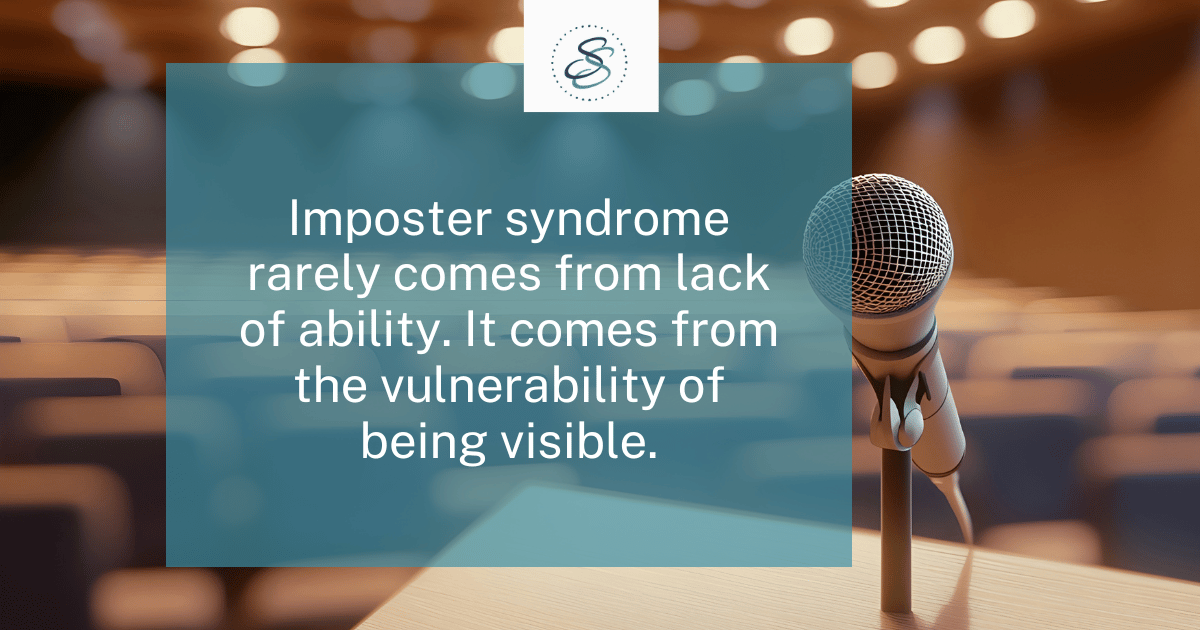
For communicators and professionals who speak, imposter syndrome is rarely about intelligence, knowledge or skills. It’s about visibility.
The more visible we are—on stage, in a boardroom, leading a meeting—the more exposed we feel. You cannot edit yourself in real time. You are evaluated as you speak. Visibility amplifies vulnerability.
When Imposter Syndrome Is Actually Growth
Sometimes, when we feel vulnerable, we also doubt ourselves. But not all doubt is imposter syndrome. Oftentimes, it’s simply growth. Ask yourself:
- Is this discomfort because I’m unqualified—or because I’m stretching?
- Is this fear because I’m unprepared—or because I care deeply about doing well?
That distinction matters.
Another factor at play is the “Curse of Knowledge,” a concept the Heath brothers describe in Made to Stick. Once we know something, it becomes difficult to imagine not knowing it. As communicators, we think, “This is obvious. Everyone already knows this.”
But obvious to you is not obvious to your audience.
Your value is not just in groundbreaking ideas. It is in clarity, synthesis, lived experience, and the ability to translate complexity into insight. What feels basic to you may be a breakthrough for someone else.
How Imposter Syndrome Shows Up in Behavior
Imposter syndrome also shows up behaviorally. It can look like:
- Underpricing your services
- Over-preparing to compensate for insecurity
- Over-explaining in meetings
- Apologizing before you speak
If your audience can’t easily articulate what you said, they may have enjoyed you—but they won’t stay connected to the work.
A Simple Reset Before You Speak
Before your next presentation, try this brief reset:
- Write down three credentials or experiences that qualify you to speak.
- Write down three people you’ve helped.
- Write down one specific outcome your audience needs.
This shifts your mindset and the internal question from “Am I enough?” to “How can I serve?”
Imposter syndrome shrinks when purpose expands.
Confidence Is Acting Despite Doubt
Confidence is not the absence of doubt. It is the decision to act in alignment with your expertise despite the doubt.
Your authority does not begin when the self-doubt disappears. It begins the moment you feel vulnerable and choose to speak anyway.
When has imposter syndrome shown up for you? During a moment of growth or visibility?
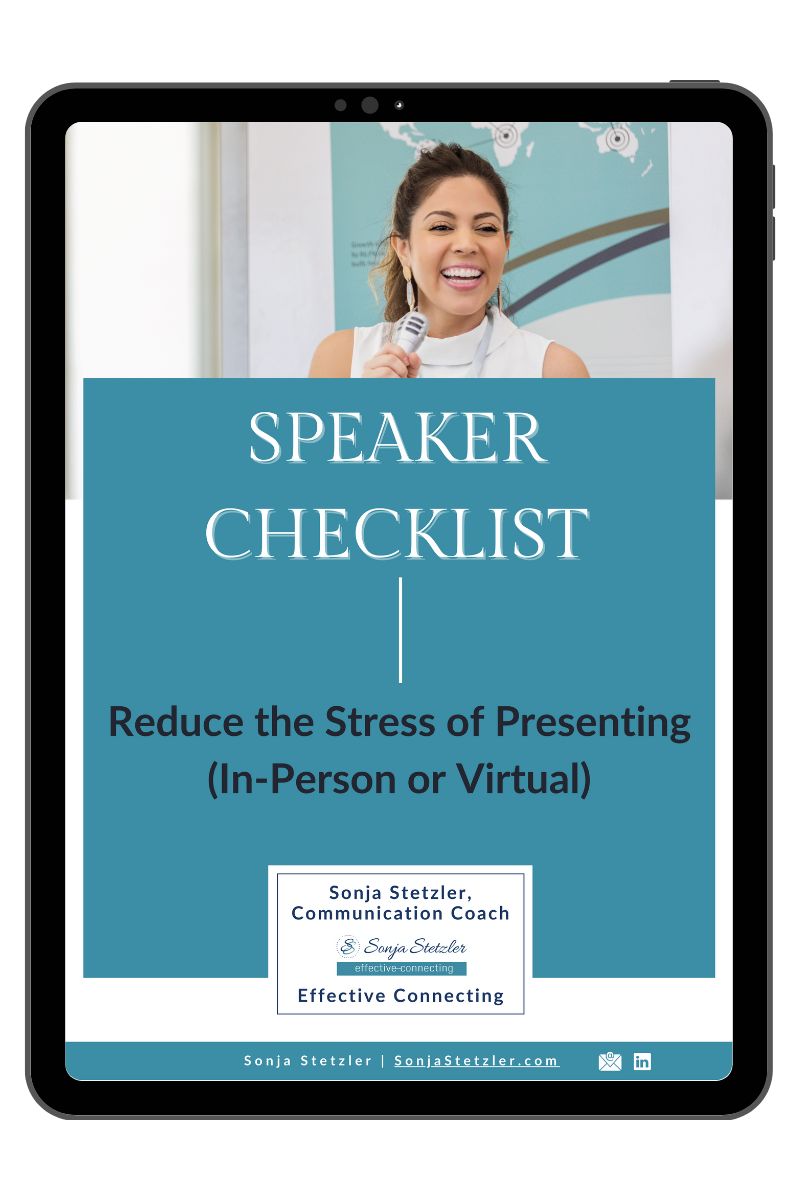
Enter your name and email below to grab my FREE Speaker Checklist to feel fully prepared and confident to deliver your very best.