
Human connection in communication builds trust, presence, and engagement in ways AI simply cannot replicate.
Communicators today are no longer evaluated only by how well they deliver information. We are evaluated by how effectively we create engagement, trust, clarity, and emotional connection across multiple platforms and attention spans.
Using AI can be a bonus to speakers as it can assist and accelerate speaker prep work such as brainstorming ideas, organizing content, and creating images. What it cannot do is replicate human presence.
AI cannot genuinely care, intuit emotion, recognize unspoken tension, or make another human being feel seen and valued. While AI is reshaping communication, human connection remains the differentiator.
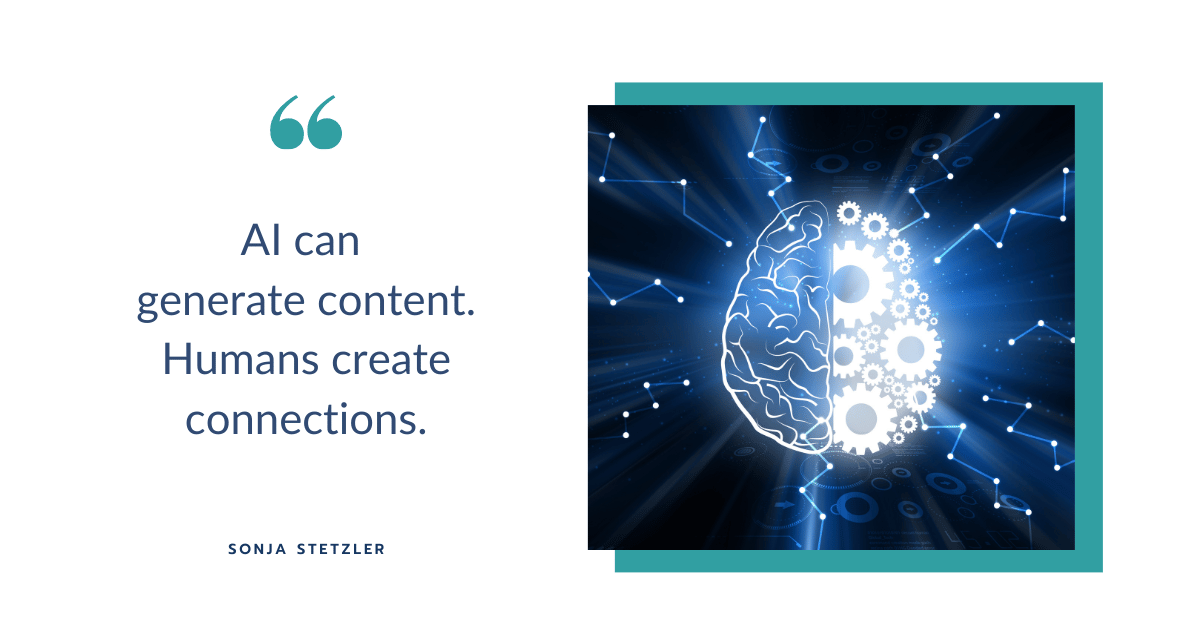
Here are 5 skills that humans can accomplish that AI can’t:
1. Building Trust
AI can help draft a message, yet trust is established through consistency, empathy, responsiveness, and authenticity. Trust is built less through perfect wording and more through congruence.
When words and nonverbal communication (tone, facial expression, gestures) align, audiences intuitively feel that a speaker feels genuine, credible, and emotionally safe.
2. Reading the Room
A skilled speaker knows when to pause, simplify, add humor, invite interaction, or shift emotional tone. The ability to sense the emotional climate of a room, whether physical or virtual, remains deeply human.
In hybrid and virtual environments, “reading the room” has become more challenging, not less important. Communicators must now detect engagement through smaller cues: camera behavior, chat participation, vocal tone, and digital interaction.
3. Authentic Storytelling
Facts inform an audience; however, stories make an emotional connection. Authentic storytelling allows audiences to connect not just with information, but with the humanity behind the message. The most compelling stories contain vulnerability, tension, uncertainty, growth, and lived experience.
Audiences connect with speakers who sound real, not perfect. As AI-generated content becomes more common, authenticity becomes more valuable.
4. Emotional Intelligence
In communication, emotional intelligence influences timing, tone, empathy, listening, conflict navigation, and relational awareness. It determines whether people feel dismissed or respected, criticized or encouraged, disconnected or included.
Technical communication may transfer information, but emotionally intelligent communication builds relationships.
5. Presence
Presence is difficult to define, yet audiences immediately recognize it. Presence is the ability to fully own a room with confidence, attentiveness, emotional steadiness, and focus.
Speakers with a strong presence create a sense of connection even in large rooms or virtual spaces. Their attention feels directed, grounded, and sincere.
Human Connection Skills Still Matter
In the past, speakers were rewarded for their expertise, polish, and even technical prowess. The shift that is occurring is toward more relational trust, authentic presence, and meaningful connection.
The future belongs less to those who merely communicate information, and more to those who create human connection – to those who make people feel valued, understood, and connected in an increasingly automated world.
Enter your name and email below to grab my FREE Speaker Checklist to feel fully prepared and confident to deliver your very best.