Be more present in conversations using the power of pause.
Here we are – the holiday season is right around the corner, and with that thought, I’m already starting to feel the stress of the hustle and bustle of the season. Just the thought of how quickly this year has passed and how I’m going to get those ‘to-do’s’ off my list are enough to put me in a tailspin.
This year I am trying something different. A colleague has offered to guest post on my blog this month, and I accepted. Her article is a timely reminder to take a pause when things feel or even before you feel frenzied.
Remembering to take a pause (or a ‘beat’ as we say in the speakers’ world) helps to lower cortisol (your stress hormone) and think more clearly when stressful situations arise.
Guest Post by Dr. Lauren Chase
In today’s world, conversations move fast.
We listen with one ear, scroll with the other, and often plan our next response before the other person finishes their sentence. It’s no wonder so many of us leave interactions feeling unheard, misunderstood, or emotionally drained.
But what if the secret to more meaningful, less stressful communication isn’t about saying the right thing. It’s about learning to pause before we speak?
As a therapist, I’ve seen how a simple pause can transform communication. It helps us slow down enough to notice what we’re feeling, respond thoughtfully, and truly connect with the person in front of us.
Let’s talk about how mindfulness and the power of pause can strengthen your presence in every conversation.
Why the Pause Matters:
1. It gives your brain a chance to catch up.
When we feel anxious, defensive, or triggered, our body goes into “fight or flight” mode. We react before we think.
Even a two-second pause allows your body to take a breath, your mind to regroup, and your words to come from calm rather than chaos.
Therapists call this self-regulation, and it’s one of the core skills that helps people manage anxiety, communicate clearly, and make better decisions.
A 2020 study in Patient Education and Counseling found that brief moments of silence in conversations helped both speakers and listeners feel more grounded and emotionally understood.
2. It makes space for real connection.
A pause can be an act of respect. It says, “I’m really hearing you.”
In therapy, those few seconds of silence often help clients open up or find the words they didn’t know they had.
The same applies outside of therapy, whether you’re talking to your partner, colleague, or child. When you pause before responding, you show that you’re listening to understand, not just to reply.
3. It helps you notice what’s really going on.
Mindfulness simply means paying attention, on purpose, to the present moment without judgment.
When you pause, you give yourself a chance to notice:
- What am I feeling right now?
- What story am I telling myself about this situation?
- What does the other person actually need from me right now?
Those micro-moments of awareness can shift the entire tone of a conversation. They help you respond with clarity instead of reacting from emotion.
How to Practice the Pause in Daily Life
You don’t need a meditation cushion or a therapist’s couch to do this. Try one or two of these practical strategies this week:
1. The “One-Breath Rule”
Before you respond in a tense conversation, take one slow, full breath. Feel your feet on the floor. Then speak.
This small pause can prevent a lot of words you might regret later.
2. Reflect before reacting
When someone says something triggering, try reflecting what you heard before adding your own thoughts.
For example:
“It sounds like you felt really frustrated when that happened.”
Pause. Let them confirm or clarify. Then continue.
Reflective pauses help people feel heard and help you avoid jumping to conclusions.
3. Try a “mindful meeting” moment
Before a family conversation or work meeting, invite everyone to take 30 seconds of quiet breathing.
It feels awkward at first, but it often shifts the energy from rushed to ready.
4. The “STOP” technique
This tool is used in mindfulness-based therapy and can be a great way to reset in stressful moments:
S – Stop what you’re doing
T – Take a breath
O – Observe what’s happening inside and around you
P – Proceed with awareness
5. Build “micro-pauses” into your day
Before you open your email, step into your house, or start your next meeting, pause.
Take three breaths.
Notice your body.
Then begin again.
These brief resets help you carry mindfulness into communication naturally rather than forcing it.
What Research Tells Us
Mindfulness isn’t just trendy. It’s backed by decades of research.
Studies have shown that mindfulness practices can:
- Improve emotional regulation and empathy (American Psychological Association)
- Strengthen communication and relationship satisfaction (National Center for Biotechnology Information)
- Reduce anxiety and improve well-being (National Institutes of Health)
In therapy, I’ve seen how clients who practice mindful pauses learn to stay more centered, especially when conversations get difficult. They report fewer misunderstandings and more meaningful connections, both at work and at home.
Bringing It All Together
When you start pausing before you speak, you’ll notice something shift.
Your words become more intentional.
Your listening becomes deeper.
And your relationships start to feel calmer, safer, and more authentic.
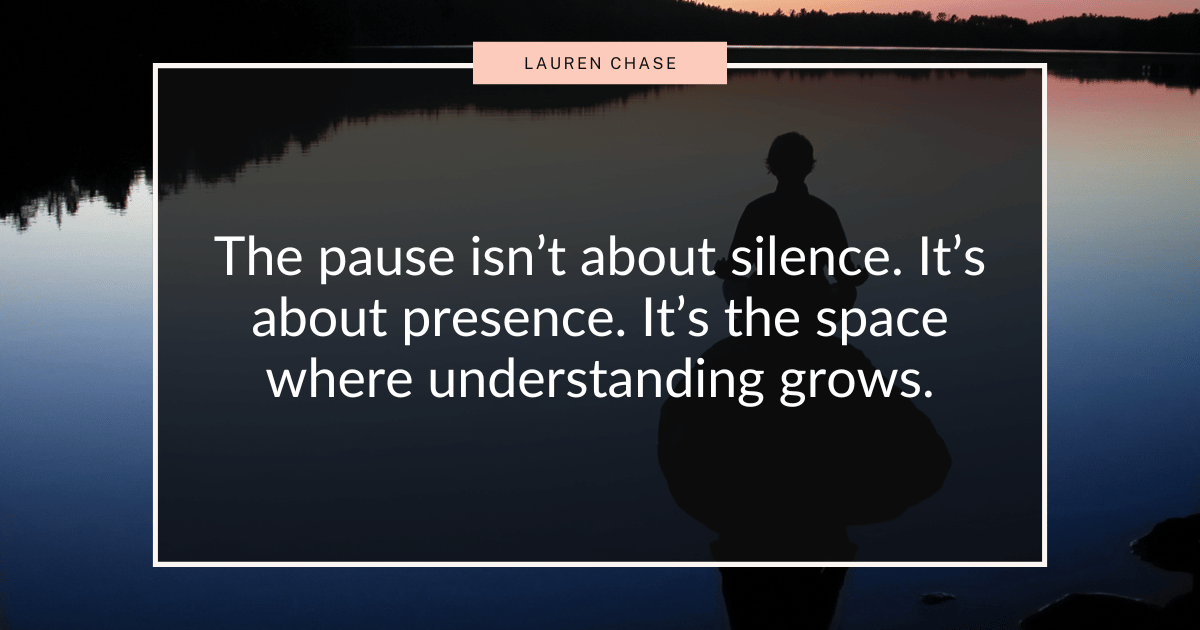
The pause isn’t about silence. It’s about presence.
It’s the space where understanding grows.
So next time you’re in a conversation, pause.
Take a breath.
Let your presence speak louder than your words.
Ready to strengthen your communication and create more balance in your life?
Learn more about working together or join my Holiday Boundaries Group for Women at www.climbinghillscounseling.com/group-therapy-nc-sc-fl, or contact me directly at lauren@climbinghillscounseling.com.
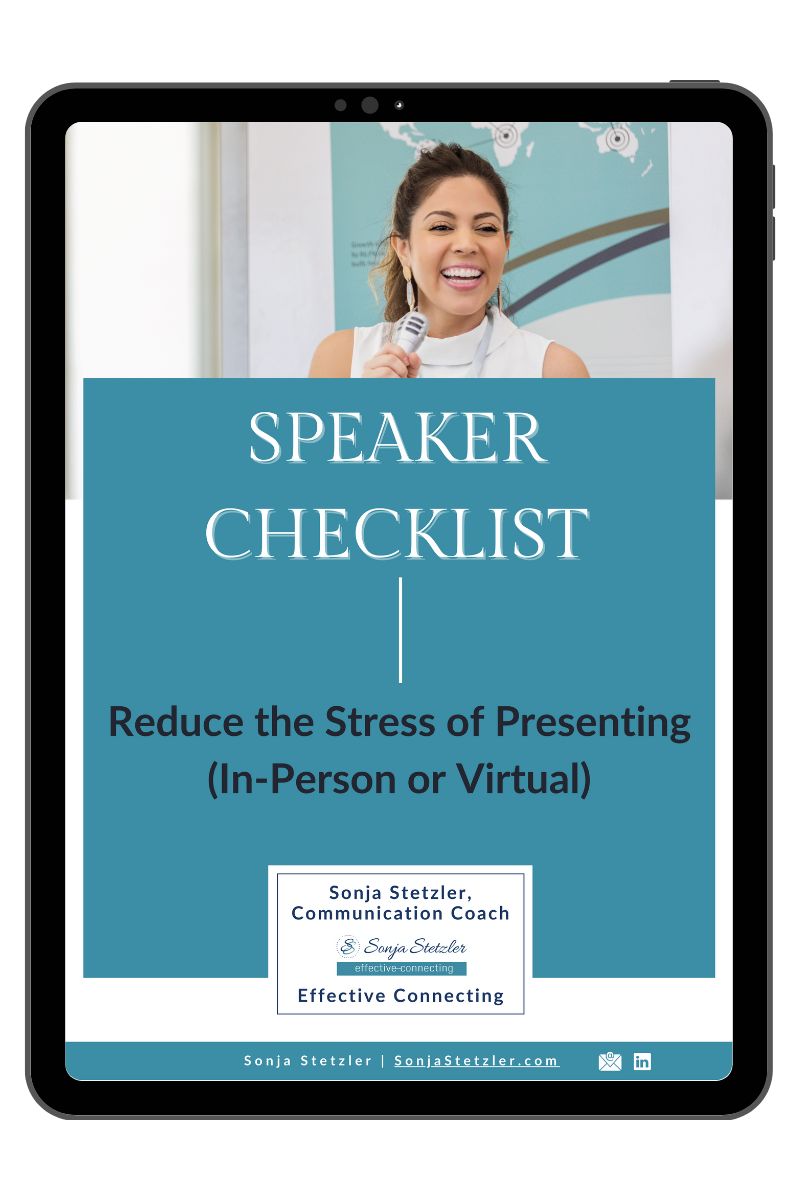
Enter your name and email below to grab my FREE Speaker Checklist to feel fully prepared and confident to deliver your very best.